


Dubai's Second-Address Wardrobe: How UHNI Families Are Composing Their Emirati Life
The Emirates Hills residence looks, to a first-time visitor, like something out of a hotel brochure. Twelve bedrooms; a courtyard with an eighty-year-old olive tree flown in from Andalusia; a private study lined in Macassar ebony. It belongs to a Mumbai family we have worked with for three years - one of an increasingly large number of Indian UHNI families who now live between Mumbai and Dubai in something close to equal measure.
The second address, arrived
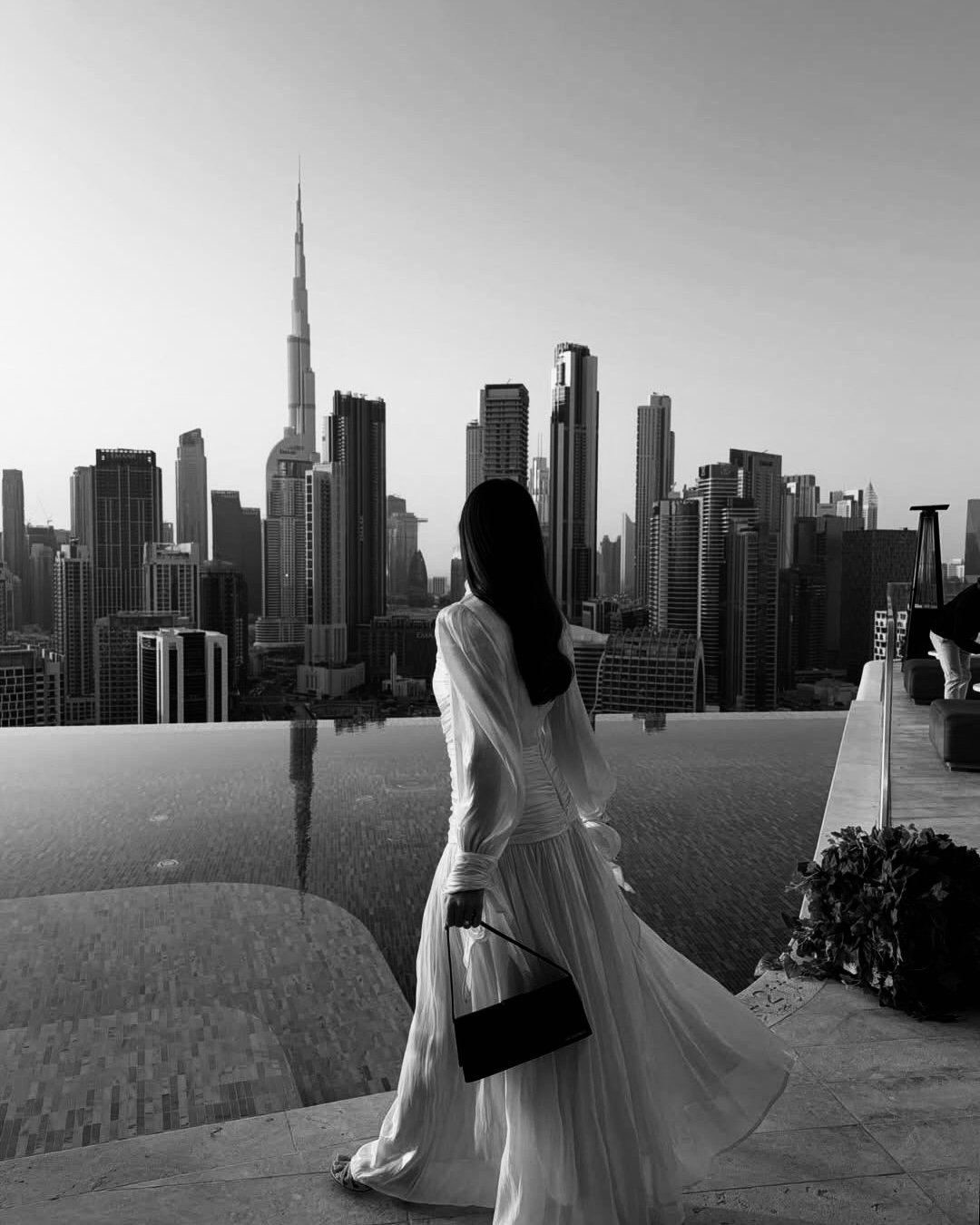
This is the shape of the modern Indian UHNI presence in the UAE. It is no longer only the second-home crowd of a decade ago, who kept a Palm Jumeirah apartment for winter weekends. It is now, increasingly, a full second address - an anchored life in Dubai, with school calendars, DIFC business commitments, an Emirates Hills or Downtown residence, and a social season that runs from October through April with the same density as a Mumbai winter.
The wardrobe implications are more complex than most families anticipate.
Not a Bombay closet, extended
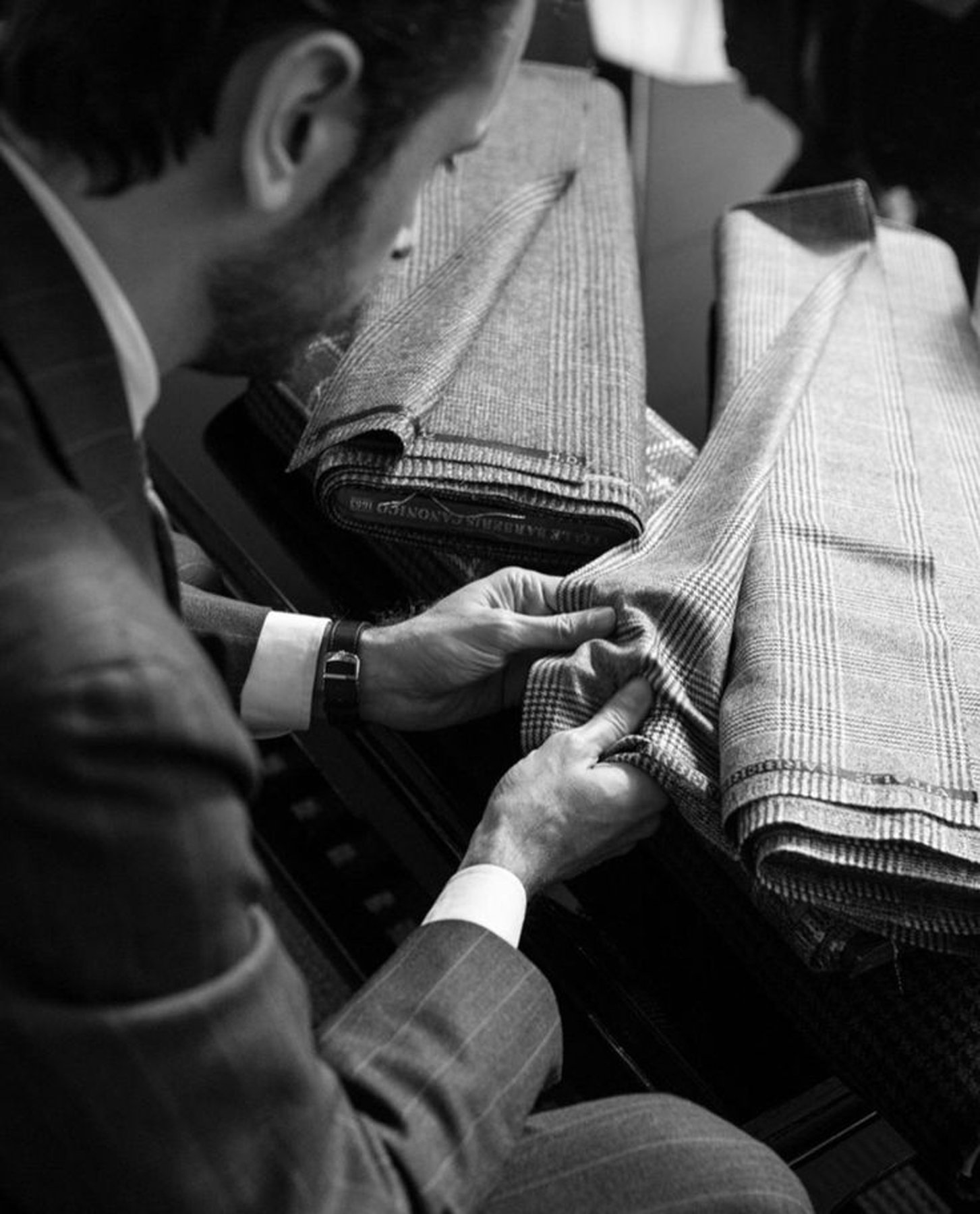
In Mumbai, an HNI woman's wardrobe is shaped by six months of monsoon and six months of dry heat, by a calendar that peaks in wedding season, and by a professional and philanthropic register that runs on Indian textile vocabulary - Chanderi, Banarasi, Kanjeevaram, tussar, mulmul. In Dubai, the climate is a nearly year-round desert with two humid coastal months, the calendar peaks between DIFC finance events and Emirati private dinners, and the vocabulary is a different mix: kaftans and abayas for local functions, resort silhouettes for brunch culture, refined Western tailoring for the professional layer, and a parallel Indian wardrobe for the still-substantial Indian wedding season inside the UAE.
The temptation is to run the Dubai wardrobe as an extension of the Mumbai one - flying pieces back and forth, keeping duplicates of favourite sarees at each residence. This does not work. The Dubai wardrobe is not a subset of the Indian wardrobe. It is a distinct discipline.
Climate first, then calendar
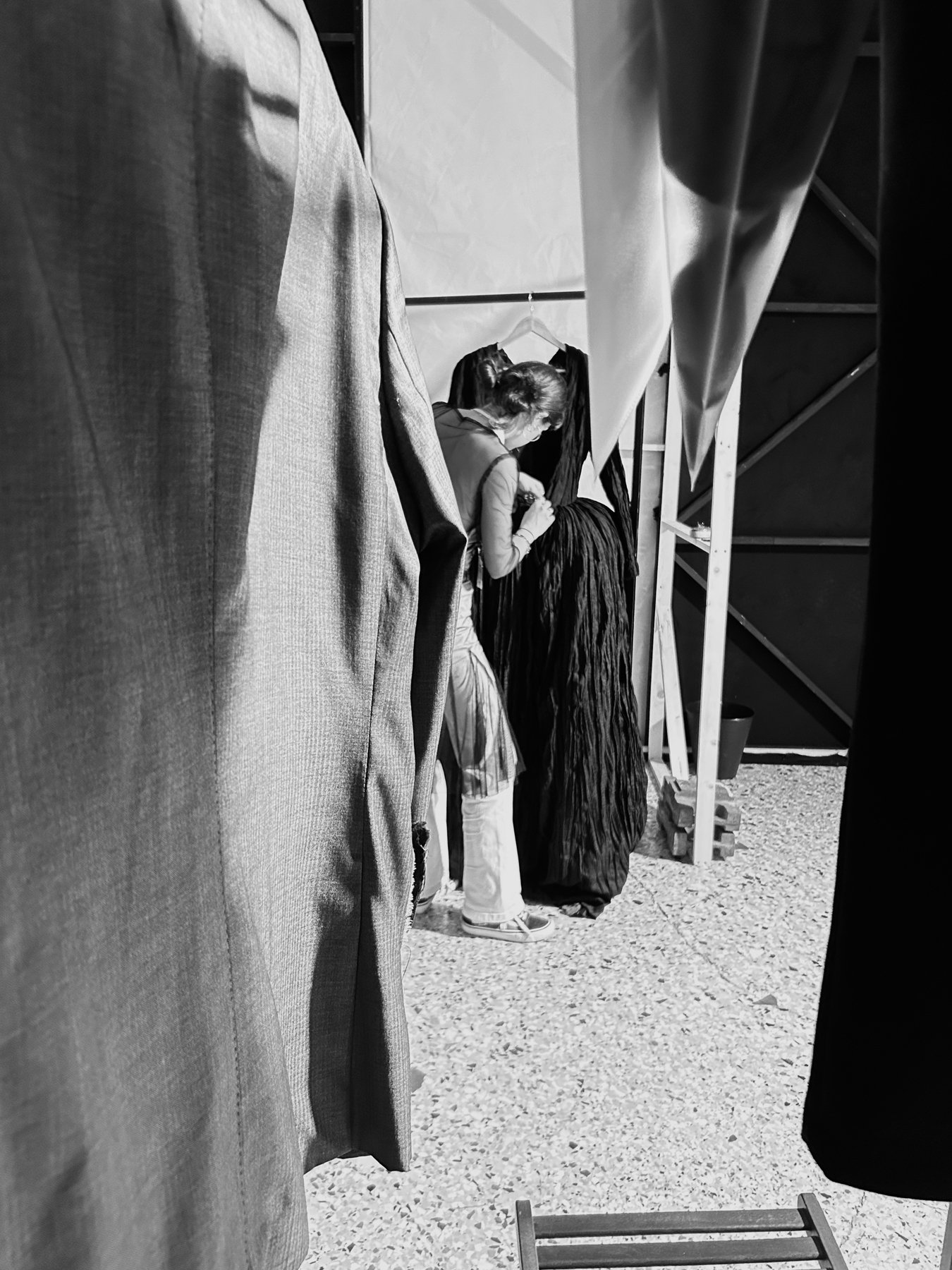
Dubai's summer humidity is unforgiving on silk, on structured cotton, on unlined jackets, on jewellery closures; storage protocols that work perfectly in a Malabar Hill flat can degrade a Sabyasachi lehenga in a Palm villa within eight months. Our first act with any new Dubai residence is a full climate audit - humidity levels, air-conditioning ventilation, sunlight exposure, storage textiles. Silica-gel systems, dehumidifiers, and archival-grade cotton bagging are calibrated to the Dubai residence specifically.
The second divergence is the social calendar. A Dubai winter week for an Indian UHNI woman resident in Emirates Hills might now involve a Wednesday brunch at Trésind Studio, a Thursday private viewing at Sotheby's DIFC, a Friday Emirati wedding at the Ritz-Carlton JBR, a Saturday Indian sangeet at the Waldorf Palm, and a Sunday polo lunch at Al Habtoor. Each belongs to a different code. None is served by simply extending the Bombay closet.
The Indian wedding, held in Dubai
One sub-market we now serve heavily is the Indian wedding held in Dubai. The UAE has become a major Indian-format wedding destination, drawing families from India, the wider Middle East, London, and Singapore. The wedding functions themselves are Indian in composition; the venues, vendors, climate, and guest movement are Emirati.
This is a specific coordination challenge, and The Luxe Wardrobe is set up to solve it. We run trousseau and wedding wardrobe projects across the Bombay-Dubai axis regularly. The composition arrives in Dubai as one wedding, seventeen functions, and a family whose wardrobes have been aligned across three continents.
One composition, two continents
Beyond weddings, the Dubai wardrobe has registers a Mumbai atelier learns only through spending time in the city. The abaya wardrobe, sourced through Dubai and Abu Dhabi ateliers whose craftsmanship rivals any Indian couture. The kaftan wardrobe for pool and yacht culture. The evening wardrobe for DIFC and Downtown business dinners, which tends toward a quieter register than Mumbai's - a Gulf sensibility that reads restraint as authority.
What we bring is the discipline our Indian clients already know from Mumbai, extended into their Emirati life. The wardrobe in Emirates Hills, over time, becomes as considered as the wardrobe in Bandra. The family stops experiencing Dubai as a second life and begins experiencing it as an extension of their first.
Frequently Asked Questions
Does The Luxe Wardrobe offer wardrobe management in Dubai?
Yes. Our BKC-headquartered practice extends to Dubai as one of our key destinations, serving UHNI families in Emirates Hills, along Sheikh Zayed Road, Downtown, Palm Jumeirah, and Business Bay.
Is there a personal stylist in Dubai for HNI clients?
The Luxe Wardrobe offers personal styling in Dubai, with fluency in Indian couture, Emirati abaya wardrobes, DIFC business codes, and Dubai brunch and yacht dressing.
Can The Luxe Wardrobe manage an Indian wedding held in Dubai?
Yes. We regularly run trousseau and wedding wardrobe projects for Indian weddings at Ritz-Carlton DIFC, Waldorf Astoria Palm, and Four Seasons Jumeirah.
How often do you visit Dubai clients?
On average, every four to five weeks on-site, with continuous remote coordination between visits from the Mumbai atelier and same-day support on call.
What does luxury wardrobe management in Dubai include?
Luxury wardrobe management in Dubai includes climate-calibrated storage, seasonal rotation between Mumbai and Dubai, trousseau composition, Indian and Emirati couture sourcing, and personal shopping across the city's luxury retail.
A private view into new launches, trusted brands, and what’s next.