
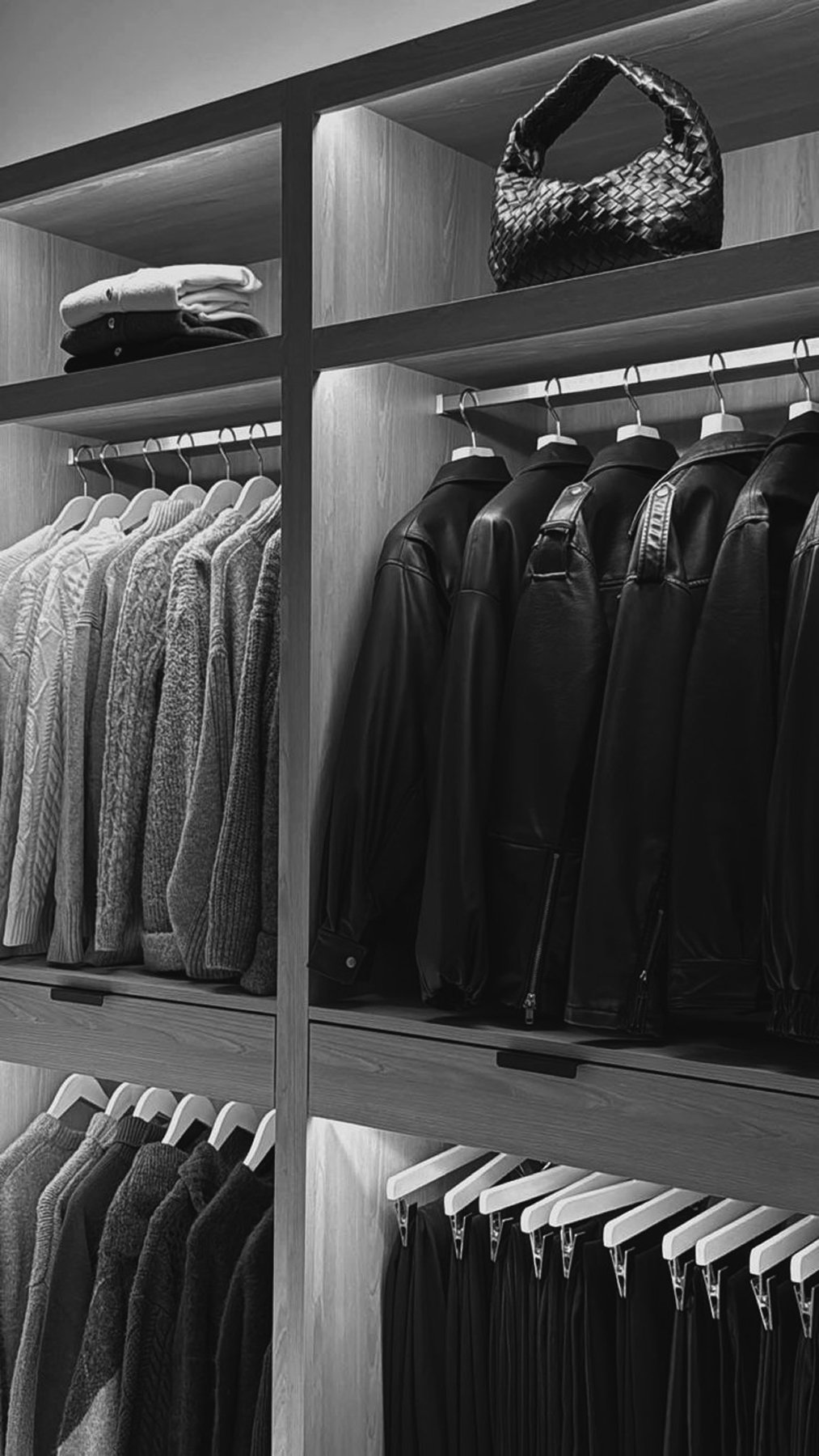


Most Wardrobes Are Not Damaged by Use. They Are Damaged by Storage.
The cashmere that moths found because it was washed with ordinary detergent and folded in a cedar-free drawer. The structured blazer that developed shoulder bumps from a wire hanger it occupied for nine months, the silk blouse that faded from light exposure during a season it was never worn.
The enemy of a luxury wardrobe is almost never the occasions you dress for, it is everything that happens in between.
Seasonal wardrobe rotation and preservation is the practice that distinguishes a wardrobe that lasts a decade from one that looks dated in three years. It is, at its most sophisticated, a form of stewardship: treating the pieces you own not as consumables, but as long-term assets that require specific conditions to maintain their value and appearance. It is also, for many of our clients, the most meaningful outcome of working with a professional wardrobe manager - not the edit, not the shop, but the system that protects everything after.
The Seasonal Transition: More Than Just Swapping
The conventional approach to seasonal wardrobe rotation is to move summer pieces into storage and bring out winter pieces in October. This is the right instinct, executed at the wrong resolution.
A proper seasonal transition involves four steps that most people skip entirely.
- First, every item being stored must be cleaned before it enters storage. This is non-negotiable. Body oils, invisible food residue, and environmental particulates that are undetectable on a freshly worn garment will oxidise over six months and emerge as stains that cannot be removed.
- Second, every item must be stored in the correct environment: breathable garment bags for structured pieces, acid-free tissue for knits and delicate items, and cedar or lavender in drawers and storage boxes for natural-fibre pieces as insect deterrents.
- Third, the storage environment itself must be assessed - humidity, light exposure, and temperature all directly affect fabric condition over a six-month period.
- Fourth, items returning from storage must be given time to breathe and recover before they re-enter active rotation. Structured pieces in particular benefit from 24 to 48 hours on a proper hanger before wear.
This level of protocol is what separates personal wardrobe management as a discipline from seasonal tidying as a habit. For executives and professionals managing significant wardrobes across multiple dress codes, this is typically where a dedicated wardrobe manager or personal stylist becomes an operational necessity rather than a luxury.
Fabric-Specific Preservation Protocols
Cashmere
Cashmere is the fabric that suffers most catastrophically from improper storage. It must be washed or dry-cleaned before storage, stored folded, never hung, as hanging stretches the fibres over time, and placed in airtight bags with cedar balls or lavender sachets. A single clothes moth can lay hundreds of eggs in unwashed cashmere; the destruction is total and permanent.
Structured Pieces
Tailored jackets, coats, and formal wear must always hang on appropriately shaped hangers in breathable canvas or cotton garment bags. Plastic garment bags, while convenient from the dry cleaner, trap moisture and accelerate fabric degradation. This is a detail that every competent personal styling service and luxury wardrobe management practitioner will address immediately during an initial wardrobe audit.
Fine Silk
Fine silk should be stored away from light, which yellows white silks and fades coloured ones within a single season, often without the wearer noticing until the damage is irreversible.
Industry consensus is clear: the correct hanger and storage system can extend the life of fine garments by four to six years. The wrong system can damage a piece beyond recovery within a single off-season.
Rotation: The Most Underused Tool in Wardrobe Management
Rotation - the practice of systematically cycling which pieces within the same category you wear, is one of the most underused tools in personal wardrobe management. Wearing the same pair of shoes for five days running accelerates degradation significantly compared to rotating across three pairs on a five-day cycle. The same logic applies to bags, belts, and fine knitwear.
For shoes specifically, the minimum recovery time between wearings is 24 hours, the time required for moisture to fully evaporate from the leather and the shoe's structure to recover its shape. For those who invest in quality footwear, this is also the interval at which shoe repair services become a meaningful part of the care cycle, not a last resort.
For bags, rotating between pieces prevents the handle and strap wear concentrated on a single item. For knitwear, the recommendation from fine Italian mills like Loro Piana and Zegna is a minimum of two days between wearings to allow the fibres to fully recover their structure.
Rotation is, in the most practical terms, how you triple the life of every piece in your wardrobe without purchasing a single new item. It is also the kind of strategy that a skilled personal stylist for executives will build into a wardrobe system from the outset, because the goal is never just to look good on any given day, but to maintain a wardrobe that performs at that level consistently over the years.
The Case for Professional Wardrobe Stewardship
For most people, the gap between knowing these protocols and executing them consistently is significant. A seasonal transition done properly takes several hours and requires materials, systems, and a degree of expertise that most people have not developed.
This is precisely why wardrobe management services exist, not to dress clients, but to protect what they have already invested in. Whether through a seasonal wardrobe rotation service, one-on-one styling consultations, or a fully managed wardrobe audit, the return on professional stewardship is measured in the extended life of pieces that would otherwise be quietly damaged by a drawer, a hanger, or six months of inattention.
The wardrobe that lasts a decade is not made of better pieces. It is made of better systems.
A private view into new launches, trusted brands, and what’s next.