



What a Personal Stylist Cannot Do
A personal stylist can dress you for tomorrow evening. She cannot dress you for the next ten years. She can pull a Manish Malhotra lehenga for the Wednesday cocktail; she cannot decide which of your ninety sarees to retire, which to restore in Varanasi, which to send to your daughter's trousseau, and which to preserve in muslin for the next generation. She can shop with you at Dior in Emporio; she cannot audit your archive across your homes in Delhi, Alibaug, Dubai, and London, and tell you what you actually own.
This is not a criticism of the personal stylist. It is a description of the scope. A stylist works at the resolution of the outfit; a wardrobe manager works at the resolution of the collection. Both are legitimate categories of work; they are not the same category. And the reason wardrobe management is under-served in India, and misunderstood almost everywhere, is because the industry has collapsed the two into one and priced them as if they were interchangeable.
The Line Between the Two
Consider what a personal stylist typically delivers: a wardrobe cleanse of half a day; a body-type and colour analysis; a shopping session in-store or online; outfits pulled for a specific event; a lookbook of ensembles for the coming season. All of this is real work, and a good stylist executes it beautifully. It is the styling layer. It sits on top of a wardrobe.
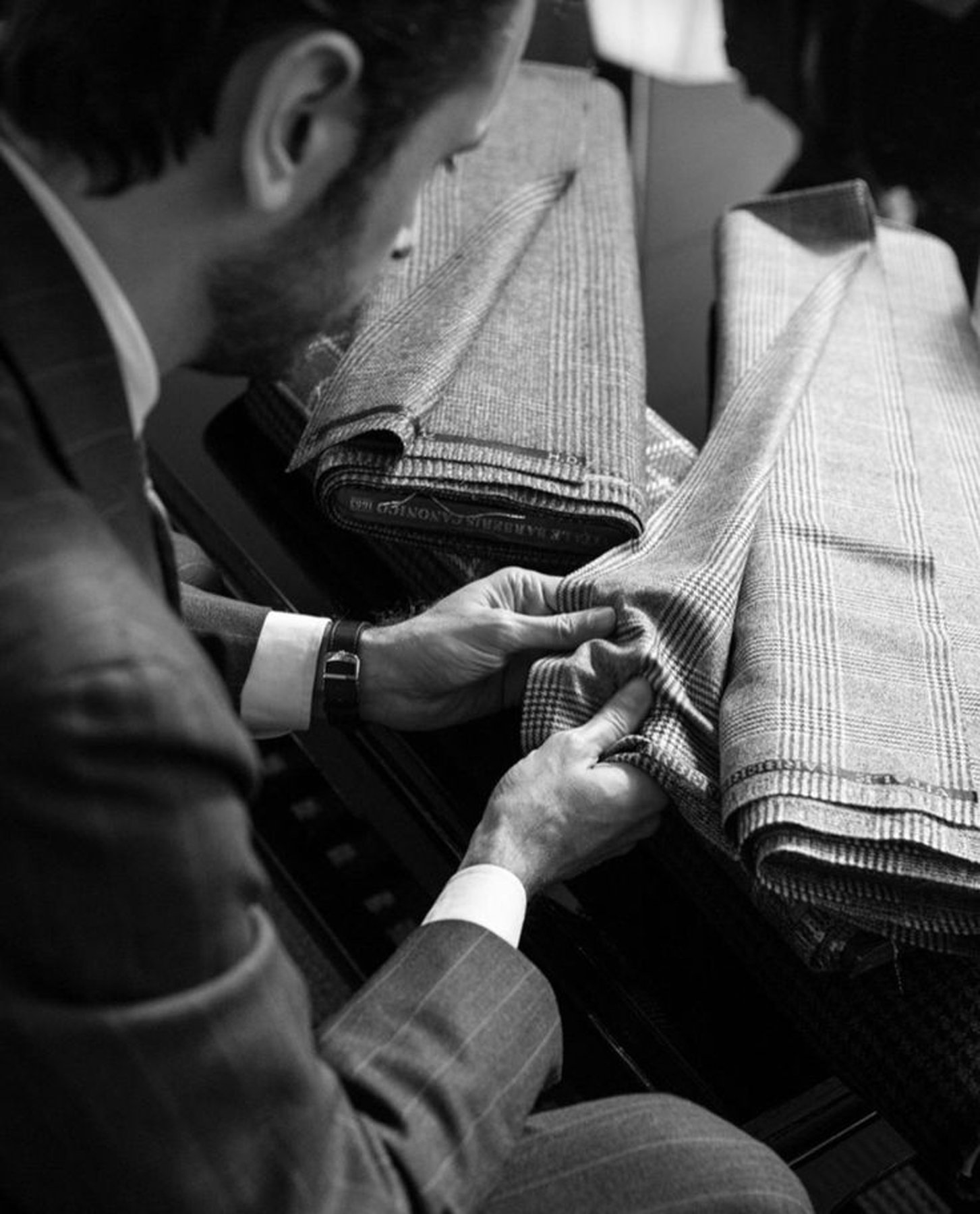
Consider what a wardrobe manager delivers, instead. A complete inventory of every garment across every residence, photographed and tagged; a condition report on each piece with restoration recommendations; a provenance record for pieces of significance; a curatorial edit distinguishing what stays, what is restyled, what moves to storage, what moves to inheritance, what leaves; a seasonal rotation plan; a coordination protocol with tailors, restorers, storage vendors, insurance providers, and household teams; and an ongoing archive updated across the year. Then, and only then, does styling begin.
Why the Industry Conflates Them
Because the market rewards it. A styling session is easy to price, easy to sell, and easy to reproduce. A wardrobe management engagement is none of those things; it is bespoke, extended, and expensive. It requires a team, not an individual; a methodology, not an intuition; and a client who understands that what she is buying is not an evening's look but a decade's discipline. The styling industry has, understandably, oriented itself around the easier product, and in doing so, it has left the harder product almost entirely undelivered.
The consequence is that clients who need wardrobe management are being offered styling instead. They accept it because it is what the market offers; they remain quietly unsatisfied because the presenting problem, the closet that is overflowing but underused, the Sabyasachi bought and forgotten, the Hermès scarf misplaced across three homes, the ancestral saree of uncertain condition sitting in a Ballygunge cupboard, has not been solved by any number of shopping sessions.
What Wardrobe Management Actually Includes
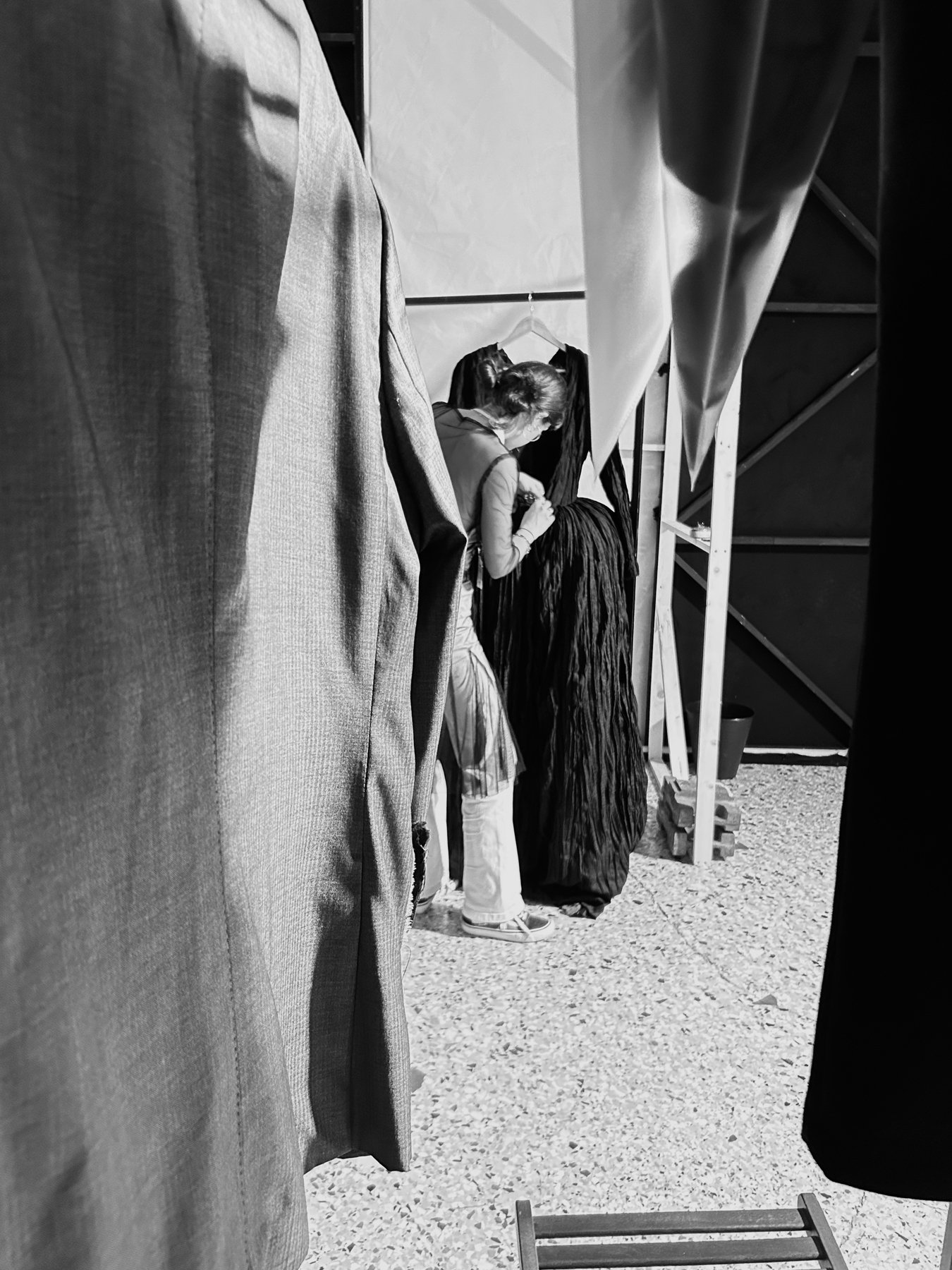
At The Luxe Wardrobe, our engagements typically include several layers that our clients would not receive from a stylist. A full physical audit at each residence, taking anywhere from two days to a week per home, depending on scale. Photographic documentation of every catalogued piece. Assessment of condition, with recommendations to send pieces to restoration ateliers in Chennai, Varanasi, or Lucknow, or to overseas specialists for European tailoring and leather goods. Storage recalibration, often involving climate-controlled cedar-lined units for silk and cashmere. Seasonal rotation across residences with logistics managed by our team. Alteration coordination with local tailors and international bespoke houses. Ongoing curatorial editorial as the wardrobe evolves. And, layered onto all of this, personal styling for specific events, which is now delivered from a wardrobe we know intimately.
The styling layer is better because everything beneath it is better. A stylist working blind into a wardrobe she does not know assembles an outfit; a stylist working within an archive we have built assembles an outfit that fits into a decade of the client's life. The difference is not visible in the mirror on the evening of the event. It is visible in the closet six months later.
When Styling Alone is Enough - and When It Isn't
For a professional in her thirties buying steadily but modestly, with a single wardrobe in a single home, a good personal stylist may be entirely sufficient. There is no need to build an archive around a wardrobe that has not yet accumulated one. For the founder in her forties whose closet has grown across a decade of acquisition, or the heiress whose trousseau alone occupies two rooms, or the diplomat whose wardrobe must live simultaneously in Delhi and in an embassy posting abroad, or the family patriarch whose bandhgalas must be as archived as his portraits, styling alone is no longer the correct offering. Wardrobe management is.
This is not a matter of pretension or over-service; it is a matter of scale. Beyond a certain volume, you cannot dress well from a wardrobe you no longer know. The stylist cannot solve this. The archivist can.
Frequently Asked Questions
What is the difference between wardrobe management and personal styling?
Personal styling assembles outfits for specific occasions; wardrobe management catalogues, curates, and preserves the entire collection over time. Styling sits on top of wardrobe management, not in place of it.
Why do luxury clients need more than a personal stylist?
Because at high wardrobe volumes and across multiple residences, clients cannot recall what they own. Ongoing management, archiving, and restoration coordination are required - work outside a stylist's scope.
Can a personal stylist manage an entire wardrobe archive?
Rarely. Archival management requires a team, a methodology, storage expertise, restoration partnerships, and logistical infrastructure across residences, resources that lie outside the freelance stylist model.
What does wardrobe curation include?
Curation includes editorial decisions about which pieces to keep, restore, retire, gift, inherit, or archive. It considers provenance, condition, occasion history, and the client's evolving lifestyle across time.
How is a wardrobe audit performed?
Our team visits each residence, physically reviews every piece, photographs it, tags it with origin and condition data, and builds a private digital archive. The audit takes two to seven days per home.
Does The Luxe Wardrobe offer ongoing wardrobe management?
Yes. Ongoing engagements include quarterly archive updates, seasonal rotation, restoration coordination, alteration management, and event-based styling drawn from the archive we maintain.
Are styling and wardrobe management priced differently?
Yes. Styling engagements are typically session or event-based; wardrobe management is a retained relationship priced against scope, residence count, and archive complexity. The two are separate service categories.
Do you work with clients who have multiple residences?
Yes. We manage wardrobes across residences in Mumbai, Delhi, Bangalore, Hyderabad, London, Dubai, Singapore, and other cities, unifying them into a single archive maintained by our team.
Wardrobes at scale deserve care at scale; that is the distinction we hold to. Everything we do is measured against it - discretion, intention, legacy.
A private view into new launches, trusted brands, and what’s next.