

The Smallest Wardrobe Decision With the Largest Consequence, And Why It's Costing You More Than You Think
There is a component of wardrobe management that no styling guide covers adequately, and that almost every luxury wardrobe gets wrong. It costs less than a meal at a good restaurant. It takes thirty minutes to implement. And the wrong choice silently destroys the structure of every fine garment you own, season by season, wear by wear.
The hanger.
Whether you've invested in bespoke tailoring, rely on a personal wardrobe management service, or have simply spent years building a wardrobe that reflects who you are, the hanger is where preservation either begins or quietly unravels.
The Hanger Is Load-Bearing Infrastructure
Every garment on a hanger is subject to constant, sustained pressure at the point of contact, typically the shoulders for jackets and shirts, the waistband for trousers, and the straps for dresses and tops. The wrong hanger applies that pressure incorrectly and permanently distorts the garment's structure. Over months, this creates bumps at jacket shoulders, stretched collar bands on shirts, and pulled fabrics at trouser waistbands.
These are not problems that pressing resolves. They are structural damage.
The Right Hanger for Each Category
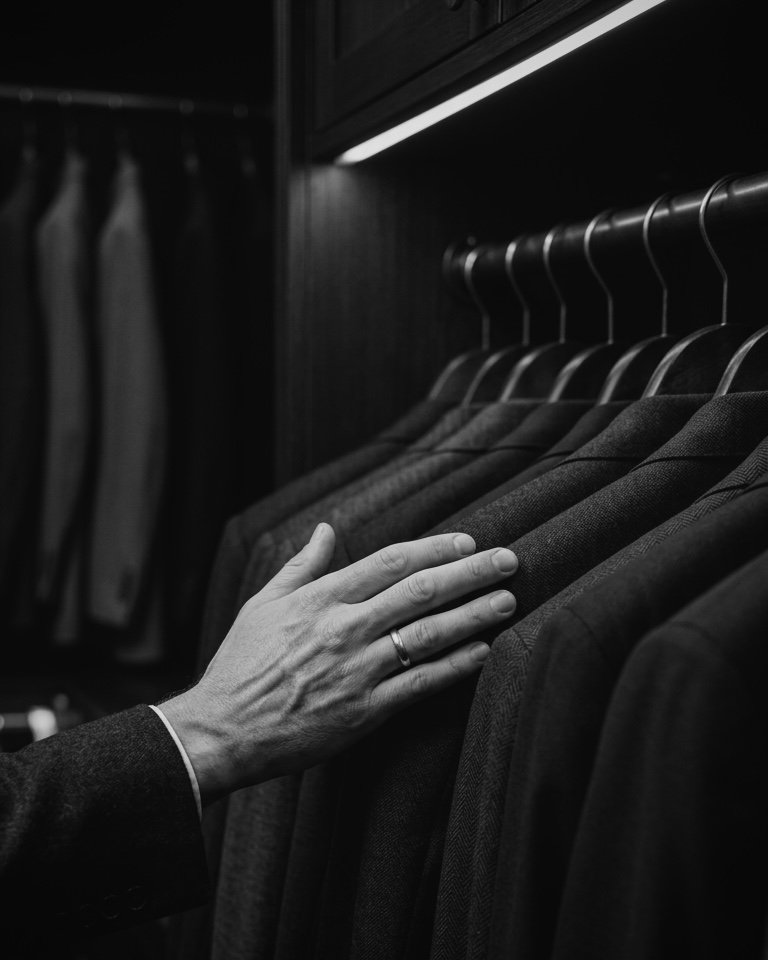
Structured jackets and blazers, whether Brioni, Kiton, Tom Ford, Zegna, or bespoke, require a wide, contoured shoulder hanger that matches or slightly exceeds the shoulder width of the jacket. The width prevents the fabric from folding over the hanger edge and distorting the shoulder. The ideal material is natural wood, heavy enough to maintain jacket structure without requiring the garment to be cinched close. A minimum shoulder width of 45cm is appropriate for most men's jackets; women's structured tailoring typically requires a slightly narrower version with the same contour principle.
This is something every professional wardrobe manager knows, and one of the first things addressed during a luxury wardrobe management audit.
Knitwear - cashmere, merino, fine cottons- should never be hung. The weight of the fabric will pull the shoulders down and create a stretched, distorted neckline within weeks. Every knit item in your wardrobe should be folded and stored flat.
This is not a minor recommendation. It is the single most impactful instruction in this entire piece.
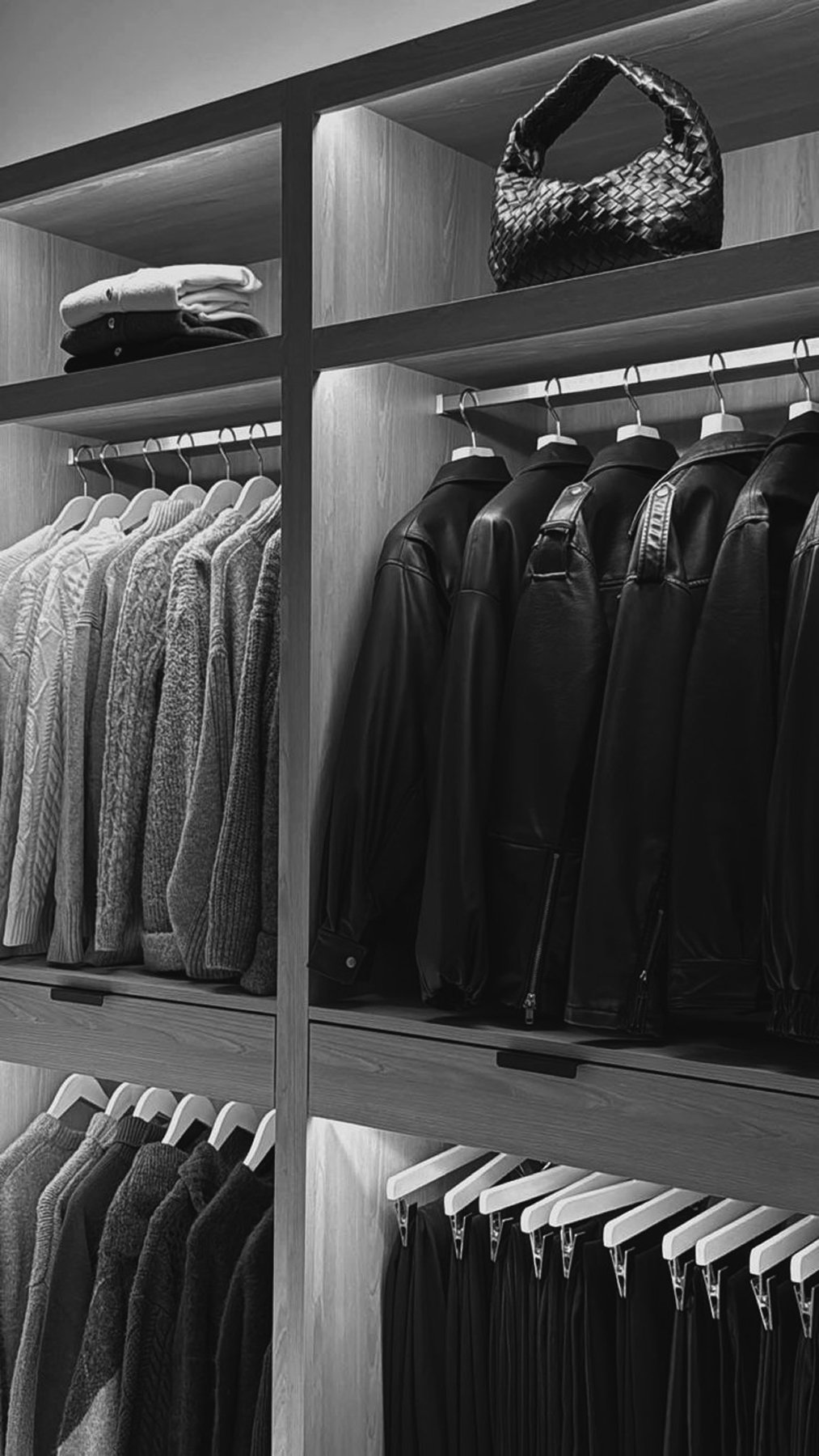
Fine trousers - particularly those in wool or wool-blend suiting- should be hung by the hem, not the waistband, using a clamp-style trouser bar hanger. Hanging by the hem allows the fabric's own weight to naturally remove creases and maintain the trousers' drape. Hanging by the waistband concentrates pressure on the waistband area and, over time, distorts the fit at the seat and hip.
The Material Hierarchy: From Worst to Best
Wire hangers, the kind from dry cleaners, are the single most destructive item in a luxury wardrobe. They are too narrow for the shoulder span of any well-cut garment, they rust with humidity and transfer rust to fabric, and they offer no support for the three-dimensional structure of a tailored piece. They should be replaced immediately and never allowed to re-enter the wardrobe.
Plastic hangers are marginally better, but still too narrow for structured garments and too light to provide meaningful support.
Velvet slim hangers, widely promoted for space efficiency, are appropriate for lightweight dresses, shirts, and blouses where surface grip is the priority. They are inappropriate for structured tailoring of any kind.
The correct hanger for the correct garment is as important to its longevity as its initial quality of construction. A bespoke suit hung on a wire hanger will distort within three months. The same suit on a correctly shaped wooden hanger will hold its structure indefinitely.
The Gold Standard
The wide-shoulder natural wood hanger with a cedar finish, providing ongoing moth deterrence, contoured shoulders, and a smooth, notched design for adjustable straps, is the benchmark for most wardrobe categories. For structured outerwear and heavy coats, a reinforced wooden hanger with additional depth at the shoulder is required to support the garment's weight without compressing the chest.
This level of detail is standard practice in personal wardrobe management and is part of what distinguishes a truly managed wardrobe from a merely organised one. When clients engage with us for wardrobe management services, hanger assessment is always among the first steps. It costs almost nothing to correct. Left unaddressed, it costs significantly more over time.
The Wardrobe Decision You Make Without Realising It
The hanger is the first decision your wardrobe makes about every piece it holds.
If you're investing in quality, whether that's bespoke tailoring, luxury ready-to-wear, or a curated wardrobe built over years, the infrastructure holding it deserves the same level of thought. This is what luxury wardrobe management, at its most precise, looks like: not grand gestures, but considered decisions at every level.
Make it the right one.
A private view into new launches, trusted brands, and what’s next.