


The Quiet Language of Old Money
There is a certain quality of hush in the drawing rooms of Golf Links, and Jor Bagh, Golf Course Road, Gurgaon, in the older apartments of Worli, Malabar Hill, and Cuffe Parade, in the bungalows of Alipore and the winter houses on Boat Club Road; a way of arriving that neither announces itself nor apologises for its presence. In these rooms, nobody asks what you do. It is presumed, or it is inferred; it is read from the cut of your kurta, the age of your handbag, the softness of your loafers, the way your Kashmiri shawl falls off one shoulder without needing to be adjusted. This is dressing for old money, and it has almost nothing to do with what the styling industry is currently selling as power dressing.
Most personal styling in India is calibrated for new money; that is not a slight, it is a description of market demand. New money speaks in logos, in volume, in newness; it has to. Recognition is currency when your name has not yet done the work for you. Old money speaks in provenance, in restraint, in continuity; it has the opposite problem. It must never look like it is trying. The wardrobe is not a statement but a habit, worn as unconsciously as language.
Where Old Money Actually Lives
The geographies are specific, and they matter. In Delhi, it is Golf Links, Jor Bagh, Sunder Nagar, Amrita Shergill Marg; in Mumbai, Malabar Hill, Napean Sea Road, Bandra, and Cuffe Parade and Altamount Road; in Kolkata, Alipore and Ballygunge; in Pune, Koregaon Park and Boat Club Road; in Chennai, Boat Club and Poes Garden; in Hyderabad, the older bungalows off Banjara Hills’ third and fourth roads. These are not the aspirational addresses. They are the addresses where families have lived for three generations, where a wedding involves nine hundred guests but is described as intimate, and where the caterer knows what silverware to bring without being told.
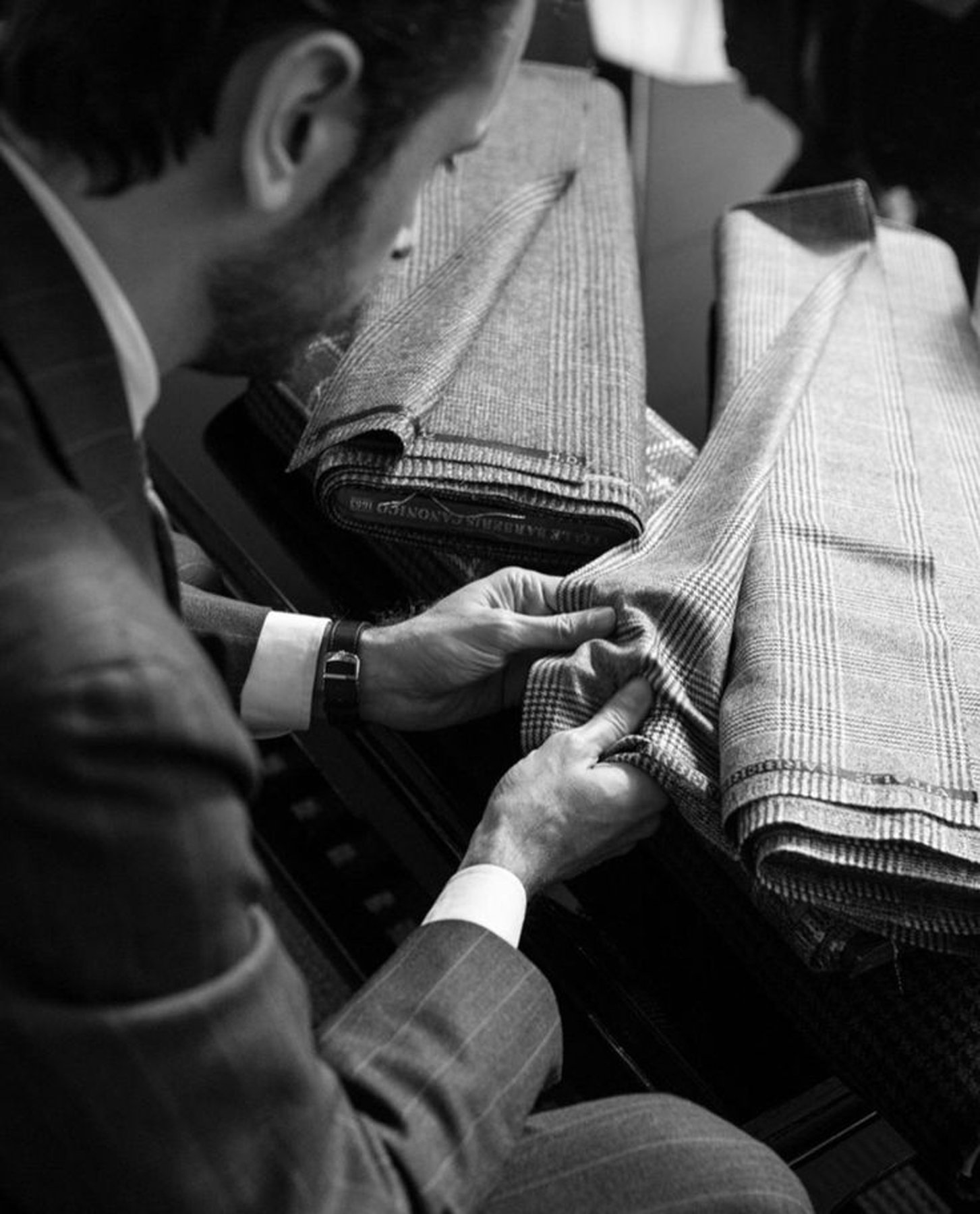
We have worked in these homes; the wardrobes are recognisable. There is a Kanjeevaram that is forty years old and reads as forty years old, not restored, not made to look new, but softened by wear and by care. There is a Nehru jacket cut by Ashok Kumar Naval-Shastri in the 1980s, still worn to Sunday lunches. There is a polki set from a family jeweller in Jaipur or Hyderabad - Kishandas & Co., perhaps, or Amrapali’s early archive, not from a couture atelier. There is a Hermes B25 from ten seasons ago, in Etoupe, patinated at the corners. Everything belongs together because everything has been chosen once, and lived with since.
The Vocabulary the Industry Doesn’t Use
If you scan the websites of India’s largest styling marketplaces, you will find endless references to body types, colour analysis, capsule wardrobes, and personal shopping. What you will not find, almost anywhere, is the vocabulary the actual client uses. Bandhani, mashru, jamdani, patola, tanchoi, kalamkari, chikankari, phulkari; the difference between a Benarasi tissue and a Benarasi katan; the reason a Kanjeevaram from Kanchipuram carries different weight than one from Salem; the fact that a good Kashmiri shawl, a genuine kani, not a printed reproduction, has a provenance signed into its weave.
This is what old money clients speak. It is what their grandmothers spoke. It is what a wardrobe manager fluent in the register speaks back; and it is why the industry’s standard offering, which does not name a single designer or textile with confidence, falls flat with them. You cannot sell colour analysis to a woman who has an inherited box of hand-block-printed Ajrakh dupattas from Kutch. She does not need to be told which colour suits her. She needs someone who understands what she already owns.
The Designers Old Money Quietly Trusts
There is a shortlist. Sabyasachi Mukherjee, unsurprisingly, but often the archival, museum-referencing pieces rather than the maximalist runway. Abhinav Mishra, Manish Malhotra for state occasions. Anamika Khanna and Tarun Tahiliani for the couture calendar. But past these, the more interesting choices: Raw Mango for handloom sarees; Bharat Trunk for restorative textiles; Payal Khandwala for architectural saris; Amit Aggarwal for engineered structure; Rahul Mishra when the embroidery must speak; Rohit Bal for the sculptural bandhgala. For jewellery, the family jewellers first, then Sunita Shekhawat, Amrapali’s bespoke atelier, and Farah Khan Ali for the modern set.
None of these names appear on the homepages of most styling firms in India. They appear naturally in the conversations we have with our clients, because they are the conversations our clients are already having.
What We Do in These Rooms Specifically
The instinct of the industry, faced with an old-money wardrobe, is to modernise it. We do the opposite. We edit it, we care for it, we complete it - we do not remake it. If the Kanjeevaram is forty years old, our job is to have it examined by a restorer in Chennai and returned to gentle circulation, not to replace it. If the Cartier bracelet was bought in Paris in 1988, our job is to build the wardrobe around it, not to eclipse it. The client’s taste has been forming since her grandmother’s trousseau; our role is to serve that taste with better logistics, better editorial judgement, and better vocabulary.
This is quiet luxury - not as a trend, which is how the phrase has been diluted, but as a discipline. It is the register the client speaks in a room where nobody asks what she does. It is the register we speak back.
Frequently Asked Questions
What does quiet luxury mean in the Indian context?
Quiet luxury in India means dressing from a place of provenance and restraint - heirloom textiles, ancestral jewellery, bespoke tailoring, softened rather than statement pieces. It privileges continuity over recognition.
How do old-money families in Delhi and Mumbai dress differently?
Delhi’s old money leans towards heavier textiles and heirloom polki jewellery for winter functions; Mumbai’s tends towards lighter drapes, ivory and pearl palettes, and refined Kanjeevarams. Both share restraint as a governing rule.
Are heirloom sarees still relevant to contemporary dressing?
Deeply. Heirloom Kanjeevarams, Benarasis, patolas, and Kashmiri kani shawls remain the most respected pieces in any UHNI wardrobe. We help clients wear, restore, and archive them across generations.
Do UHNI clients still rely on family jewellers?
Yes. Family jewellers - Kishandas & Co., Amrapali’s bespoke atelier, Sunita Shekhawat, or a family’s longstanding Jaipur or Hyderabad kaarigar remain preferred over couture jewellery for heirloom and ceremonial dressing.
How does The Luxe Wardrobe advise on generational dressing?
We treat every wardrobe as an archive spanning generations. We edit, restore, and complete rather than remake, and we document each piece so its story is preserved across family gatherings, weddings, and decades.
What is the difference between image consulting and wardrobe management for legacy families?
Image consulting sells transformation; wardrobe management preserves and refines what already exists. Legacy families rarely need to be reinvented; they need editorial stewardship and logistical mastery, which is what we provide.
Do you work with clients in Golf Links, Malabar Hill, and Alipore?
Yes. We work across Delhi’s Golf Links, Jor Bagh, and Sunder Nagar; Gurgaon’s Golf Course Road; Mumbai’s Malabar Hill, Cuffe Parade, and Altamount Road; Kolkata’s Alipore and Ballygunge; and equivalent addresses in Pune, Chennai, Hyderabad, Dubai, Singapore, and beyond.
A private view into new launches, trusted brands, and what’s next.