



From Closet to Curated Wardrobe
The step-by-step art of luxury wardrobe management - and what actually changes for a principal who commits to it.
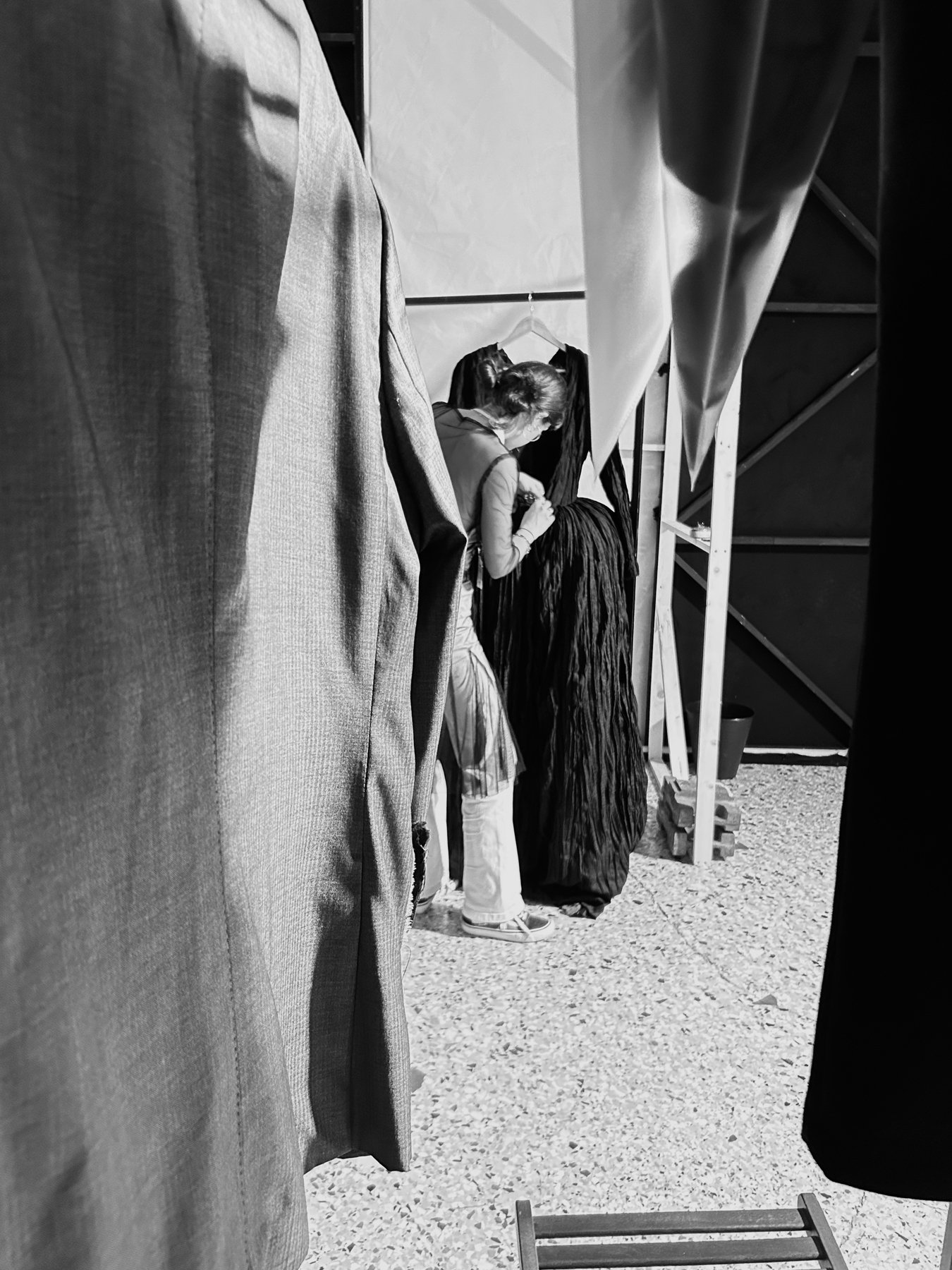
There is a moment, in the middle of a first audit at a residence, when the closet stops being a closet and becomes a wardrobe. It is a quiet moment. The stylists have been working for two days. Every piece is out of the cupboards; the digital catalogue is nearly complete; the walls of the room are lined with rails; the ottomans hold jewellery pouches and cotton dust-bags. The principal walks in with a cup of tea and stops. This, she says slowly, is more than I thought.
The moment is not about the number of pieces - though the number is, invariably, larger than the principal expected. It is about the fact that the wardrobe, for the first time in years, is being seen whole. It is being read. It is beginning to compose itself.
This piece is about what actually happens between that moment and the finished, curated wardrobe that a principal walks into three months later - the step-by-step art of a discipline that did not, until recently, exist in India as an organised profession, and that has, in the years since, become the working standard for the wardrobes we serve.
The closet a principal typically starts with
The closets we begin with are almost never empty. They are, in most cases, the accumulation of two to three decades of considered acquisitions - heirloom saris passed down from mothers and mothers-in-law; couture pieces bought at trunk shows in Bombay, Delhi, Ahmedabad and Milan; trousseau wardrobes still in their original tissue; resort edits from Alibaug, Goa and the Maldives; bespoke tailoring; leather archives; a shoe collection that has quietly outgrown the storage designed for it.
These closets are, in aesthetic terms, extraordinary. What they are not, usually, is organised. The intelligence sitting behind them lives in the principal’s head, and the principal’s head, at this altitude, has too many other things to hold. The audit begins by taking that intelligence out of the principal’s head and giving it a document of its own.
What “curation” actually involves at this scale
Curation at UHNI scale is not editing. It is composition.
Every piece is read against the lifestyle map - the calendar the wardrobe is expected to answer, the rooms it will enter, the residences it lives across, the aesthetic direction the principal is moving toward. Retentions are confirmed; restorations are placed with atelier partners; releases are decided piece by piece under written sign-off; gaps are named; acquisitions are proposed and approved. Nothing is discarded lightly. Nothing is retained unthinkingly. Every piece has a reason, and every reason is written down.
Curation, at this scale, is a discipline of intention. It is the reason a curated wardrobe, though smaller in count than the closet it emerged from, always ends up richer.
The atelier discipline that keeps it curated
A curated wardrobe is not a one-time achievement. It is a standing discipline.
Our engagements move on a quarterly rhythm. Every quarter, the wardrobe is walked again - new acquisitions catalogued, alterations completed and checked, restorations returned and re-installed, releases from the previous quarter reconciled, gaps for the season ahead named. The catalogue is refreshed. The composition is updated. The wardrobe, over years, deepens rather than expands.
This is the discipline that keeps a wardrobe in its curated state. It is also the discipline that most principals who attempt to hold their own wardrobe cannot maintain - not for lack of will, but for lack of time and vantage point. A wardrobe managed from inside itself accumulates blind spots. A wardrobe held by an atelier does not.
The transformation - one year in
By the end of the first year, the wardrobe is unrecognisable to the principal - not in what it contains (much of what she loved remains) but in how it works.
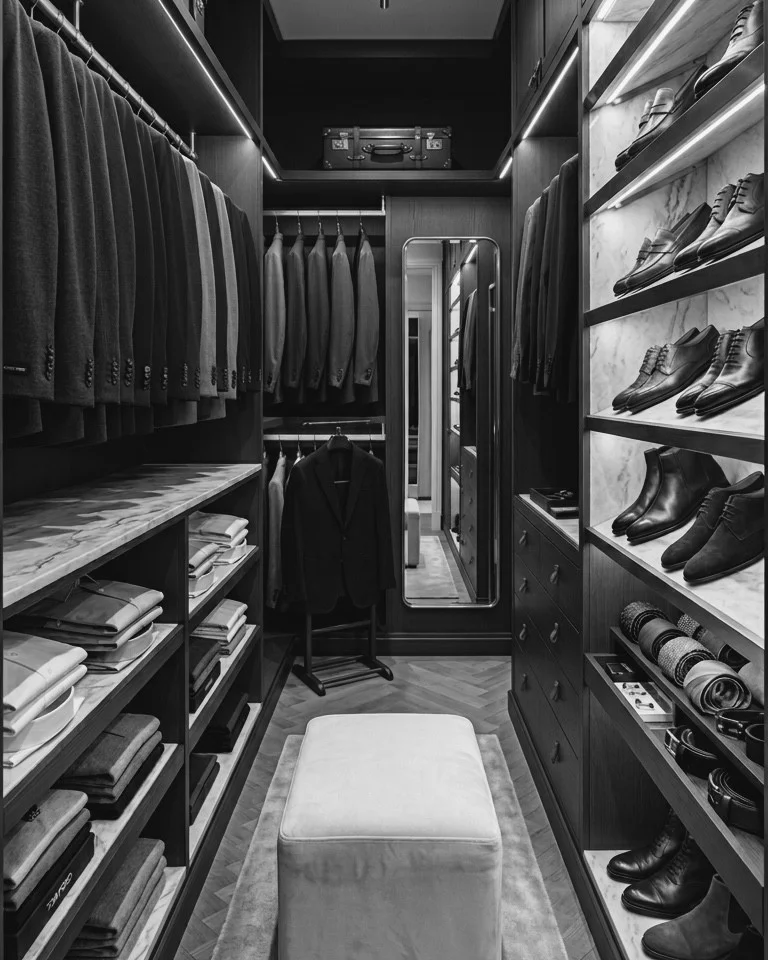
She stops opening cupboards to decide. She stops arriving at occasions with last-minute anxiety. She stops duplicating acquisitions across residences. She stops missing pieces that were quietly waiting for a room. She stops feeling behind. The wardrobe, having been curated once and then held quarterly, begins to work for her rather than the other way around.
This is the transformation our atelier has been built to deliver. It is, quietly, one of the more consequential changes our clientele report making this decade - the shift from a wardrobe they were forever a little behind on, to a wardrobe that has become, in the true sense, an asset. It is not the pieces that have changed. It is the discipline sitting behind them.
The moment the closet becomes a wardrobe is one moment. The year that follows is the arc that turns it into a curated wardrobe. The years that follow that are the discipline that keeps it there.
Our clientele across Ahmedabad, Surat, Jaipur, Bengaluru, Udaipur, Mumbai, Delhi and Dubai have quietly begun to speak of this arc as one of the most useful transitions of their adult lives. It is what we are here to hold.
FREQUENTLY ASKED QUESTIONS
1. What is the difference between a closet and a curated wardrobe?
A closet holds clothes. A curated wardrobe is a composed ecosystem - every piece catalogued, read against the calendar, and held by a standing atelier discipline that keeps it coherent over years.
2. How long does it take to move from closet to curated wardrobe?
The first audit and initial curation typically take four to eight weeks; the wardrobe crosses into fully curated territory around the second to third quarterly review, usually within six to nine months.
3. Do you offer this in Bengaluru, Chennai, Ahmedabad, Surat, Jaipur and Udaipur?
Yes. Bengaluru, Chennai, Ahmedabad, Surat, Jaipur, Udaipur, Mumbai, Delhi, Hyderabad and Kochi are active engagement cities, alongside international residences in Dubai, London and Singapore.
4. Do I need to release pieces during the curation?
Only pieces you sign off on. Nothing is released without written approval. Retentions, restorations and releases are all decided by you.
5. How is the curated wardrobe maintained over years?
Under a standing quarterly rhythm - seasonal audit, mid-quarter refinement, event-led interventions. The wardrobe deepens rather than expands.
6. Can this be done for a household - a principal, a spouse, a mother?
Yes. Household engagements are common, with wardrobes held distinctly but coordinated where required.
7. Is the process confidential?
Absolutely. Every engagement is bound by non-disclosure; access to your catalogue is restricted to the assigned stylist team.
8. How do I begin?
Reach us via https://theluxewardrobe.com/connect/; a private consultation then is arranged at your residence or your office.
A private view into new launches, trusted brands, and what’s next.