Dressing for the Record
On lifestyle and executive photography - the shoots that enter the family archive, the editorial profiles that enter the public record - and the quiet discipline of composing a wardrobe for the lens.
A Wednesday morning in a townhouse studio in Lower Parel. The founder sits on a cane chair; a window at his shoulder throws January light across the room; a photographer who shoots for one of the serious international business magazines is adjusting a reflector. The portrait, when it is finally selected and run, will accompany a two-thousand-word profile in May. It will enter the public record of his career. It will, in all likelihood, be the image a search engine returns when his name is typed, for the next five years.
He is wearing a hand-woven Chennai cotton shirt that reads as architectural rather than ornate; wide-legged ivory tailoring that holds its shape in the chair; his grandfather’s wrist watch; the fine leather shoe from ferragamo he bought himself when the company turned a hundred crores. Nothing on him was decided this morning. The composition was walked through with his stylist three weeks ago, altered where it needed to be, pressed on Monday, delivered to the studio in a garment bag at 7:30 a.m.
This piece is about dressing for the record. It is about the discipline that goes into the photographs that enter the archive - the lifestyle shoots, the editorial covers, the family portraits, the executive headshots - and about the atelier role that has quietly emerged behind the ones that read correctly.
Why the photograph is different from the day
A day is a moment; a photograph is a record. The two have different standards.
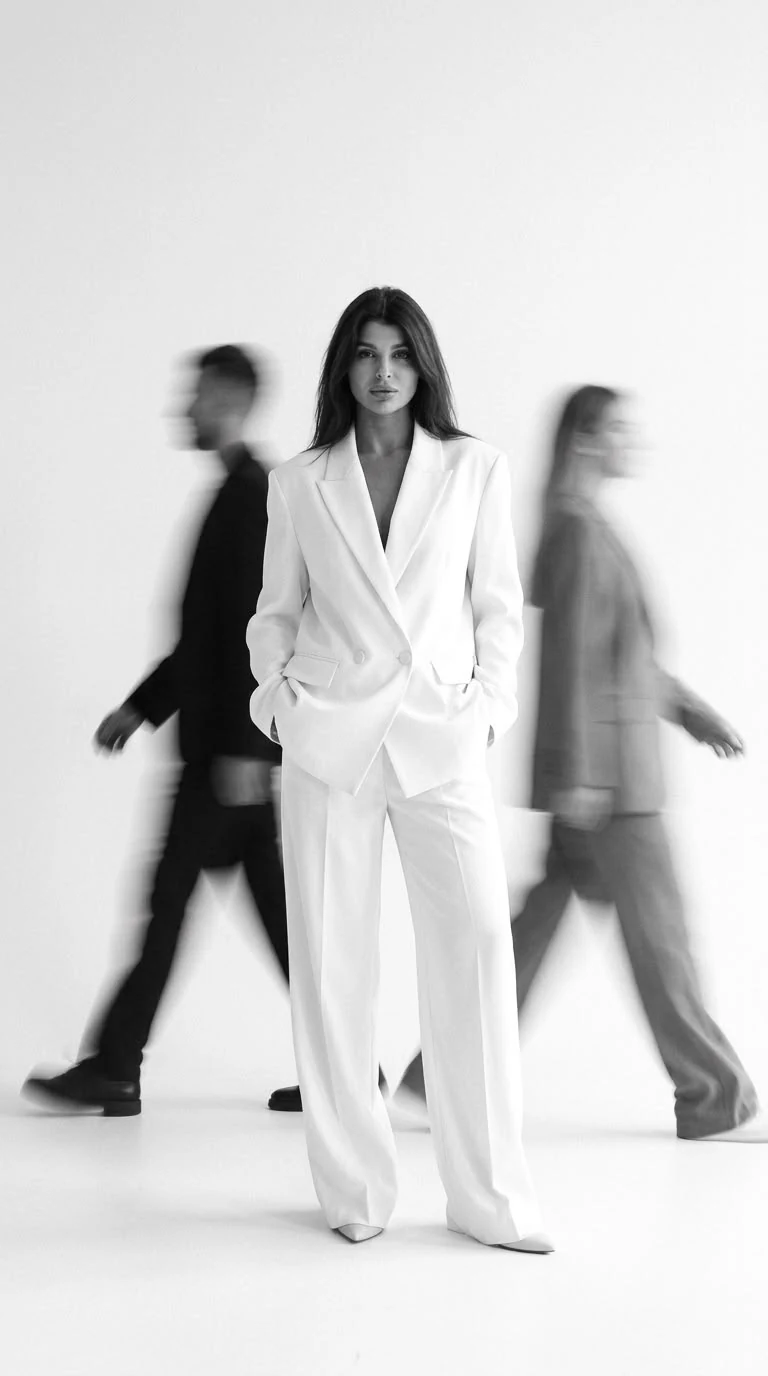
The outfit that reads correctly across a Tuesday of three meetings may not read correctly on a cover. The indo-western that is magnificent across a sangeet may not survive a camera that insists on reading seams. The tailoring that answers a boardroom may photograph a shade too close to the chair he is sitting in. The jewellery that is restrained in person may vanish in print. The palette that lives on the body may clash with the wall behind it. Dressing for the record requires a different discipline from dressing for the room - and the discipline matters disproportionately, because the photograph outlasts the day.
What goes into composing a shoot wardrobe
A shoot wardrobe is composed days or weeks in advance, against a brief that is read carefully. The publication; the photographer; the location; the lighting; the editorial direction; the intended tone of the profile; the audiences the photograph will reach; the length of time the photograph will circulate.
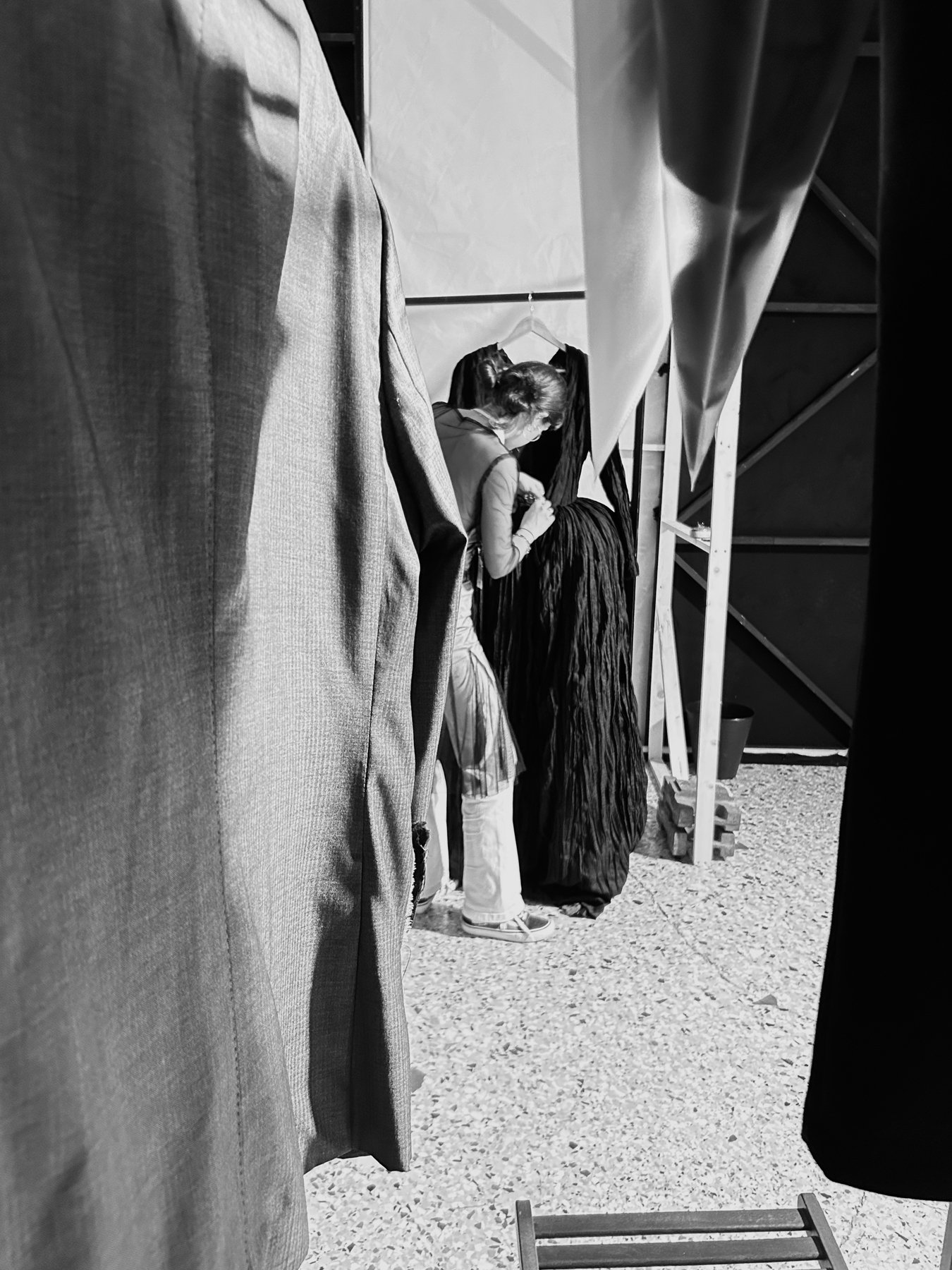
Against that brief, three to five looks are composed, each with alternates. Fit is checked under light; colour is tested against the specific set and wall; sitting silhouettes are rehearsed because most editorial portraits are seated; jewellery is scaled to the camera; hair and footwear are coordinated. Where a hair-and-makeup team is engaged separately, our stylist briefs them on the register the wardrobe will carry so that the composition reads whole. Garments are pressed the morning of the shoot, carried in archival garment bags, and installed in a dedicated changing room at the studio before the photographer sets up.
On the shoot day itself, our stylist travels with the garments and remains for the duration. Nothing is improvised. Nothing is left to a studio runner. The composition walks out of the studio looking the way it walked in.
The portraits that enter the private archive
The record is not only public. The private archive of an Indian family at this altitude is a cultural object in its own right.
The formal family portrait commissioned every ten years; the generational photograph taken at the farmhouse in Chhatarpur or the ancestral home in Kochi; the four-generation photograph that will be printed and framed in the dining room; the portrait of the matriarch that will one day sit on the piano beside her mother’s portrait. These shoots carry their own disciplines. The wardrobes have to agree across the generations without matching; the palette has to work against the specific wall that will carry the frame; the pieces have to be either timeless or specifically of their decade, so that the photograph reads clearly a hundred years from now.
Our atelier holds this discipline for the families who have asked us to. It is the quietest and most lasting kind of work we do.
How The Luxe Wardrobe holds the discipline
Shoot preparation sits inside every standing wardrobe engagement and is also offered as a dedicated service for principals preparing for a specific photograph - an editorial cover, an executive headshot cycle, a family portrait, a Vogue India feature, a Forbes India profile, a lifestyle feature in an international magazine, a book-jacket author photograph, a government or diplomatic portrait.
We hold the full chain: brief reading, composition, fitting, press, travel, set installation, on-set stylist presence, teardown, catalogue update. The principal arrives at the studio with nothing to think about but the photograph. The photograph, when it runs, reads the way she intended it to read - which is the discipline the record requires. There is almost no profession in India that holds this layer at this standard; it is one of the categories the atelier has built out specifically for the clientele that asked for it.
The image runs in May. His peers notice it. His mother keeps a print. Her daughter will, one day, find it in the archive. The wardrobe held.
This is what dressing for the record quietly delivers - and it is why the women and men whose photographs read best, at this altitude, are almost always being dressed by an atelier the room has not been told about.
FREQUENTLY ASKED QUESTIONS
1. How do stylists prepare clients for a professional photo shoot?
Three to five looks are composed against the editorial brief, fitted and altered in advance, pressed the morning of the shoot, carried in archival garment bags, and installed in a dedicated changing room before the photographer sets up.
2. What should a CEO or founder wear for a Forbes or Fortune magazine portrait?
Restrained tailoring in a cloth that holds its shape in a chair, a palette that reads against the specific set rather than competing with it, jewellery scaled to the camera, and nothing that will date within a five-year circulation window.
3. How do I prepare for an editorial profile or lifestyle photoshoot?
Engage a stylist ahead of the shoot to read the brief, compose the wardrobe, fit and alter the pieces, and attend on set. Preparation ideally begins three to four weeks before the shoot date.
4. What is executive portrait styling?
The composition of a wardrobe for an executive headshot or portrait that will enter the professional record - LinkedIn, annual reports, press, board materials - built to age well and read correctly across the five-year life of the image.
5. Who styles Indian business leaders and founders for international magazine covers?
The Luxe Wardrobe holds editorial-shoot engagements for women and men founders, chairmen and board principals across Mumbai, Delhi, Bangalore, Hyderabad, Ahmedabad, Dubai, London and Singapore.
6. How do I dress for a family portrait that will be hung in the home?
Composed against the wall it will hang on, the palette of the room, the generations present, and the hundred-year horizon - wardrobes are coordinated without matching, and pieces are chosen for either timelessness or clear period.
7. Does The Luxe Wardrobe accompany clients to photo shoots on location?
Yes. Our stylist travels with the garments, installs the wardrobe at the studio or location, remains for the shoot, and manages the composition on set end to end.
8. How do I begin a shoot-styling engagement with The Luxe Wardrobe?
Reach us via https://theluxewardrobe.com/connect/; a private consultation is arranged at your residence, or office. The brief is read, the composition is proposed, and the engagement is signed before preparation begins.
A private view into new launches, trusted brands, and what’s next.